
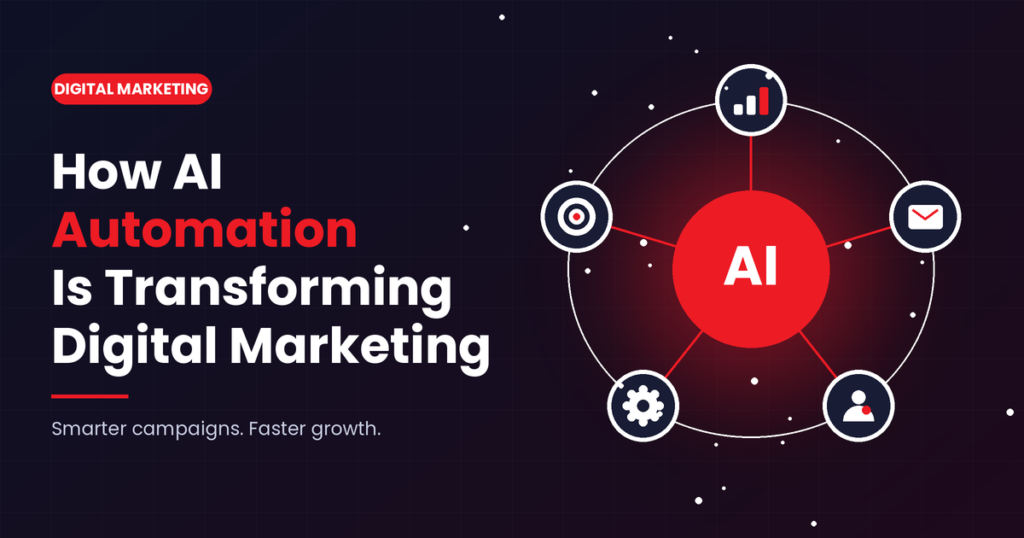
The Evolution of Marketing: Moving from Manual Tactics to Autonomous Systems
Unpacking the Shift from Static Campaigns to Intelligent Marketing Engine Architectures
Traditional marketing campaigns relied heavily on rigid, batch-processed messaging designed around arbitrary calendars. Modern growth infrastructure operates differently. It replaces static, one-size-fits-all broadcasts with continuous, self-optimizing system architectures that ingest real-time consumer signals to modulate output automatically.
This structural evolution shifts marketing from an episodic craft to a persistent algorithmic discipline. Rather than manually scheduling static creative assets weeks in advance, contemporary growth architectures deploy feedback loops that dynamically adjust budget allocations, message delivery, and audience segmentation based on immediate performance telemetries.
+-----------------------------------------------------------------------+
|                    TRADITIONAL vs. AUTONOMOUS                         |
+-----------------------------------------------------------------------+
| Traditional Static Campaign                                           |
| [ Manual Setup ] ---> [ Linear Broadcast ] ---> [ Post-Mortem Review ]|
|                                                                       |
| Autonomous Marketing Engine Architecture                              |
| [ Real-Time Signals ] -> [ Algorithmic Logic ] -> [ Dynamic Output ]  |
|          ^                                                   |        |
|          +----------------- [ Feedback Loop ] ---------------v        |
+-----------------------------------------------------------------------+
Tracing the Paradigm Shift: How Automation Replaced Manual Marketing Bottlenecks
The transition from manual campaign management to automated execution was accelerated by operational friction. Traditional workflows were bogged down by labor-intensive processes—manual data extraction, human-managed list segmentation, and delayed performance reporting—that created severe latency between consumer action and brand reaction.
| Operational Domain | Traditional Manual Approach | Autonomous Engine Architecture |
|---|---|---|
| Data Ingestion | Batch CSV exports and periodic CRM syncs | Continuous stream processing & API connectivity |
| Audience Targeting | Broad demographic segments | Real-time algorithmic micro-targeting |
| Optimization | Manual weekly or monthly adjustments | In-flight algorithmic re-allocation |
| Content Delivery | Static creative templates | Dynamic content generation and variation |
Automated data pipelines eliminated these latency barriers by continuously synchronizing customer touchpoints with decision engines. By removing repetitive administrative overhead, marketing teams reclaimed cognitive bandwidth, shifting their primary focus from operational maintenance to strategic orchestration.
Beyond Basic Rules: The Leap from Simple If-Then Workflows to Self-Learning Systems
Early automation relied on deterministic logic. These linear “if-this-then-that” decision trees governed simple drip campaigns, but they remained brittle and incapable of handling complex, non-linear buyer journeys.
DETERMINISTIC LOGIC (Legacy)
[ User Action ] ---> ( Hardcoded Rule: If X then Y ) ---> [ Fixed Output ]

MACHINE LEARNING ENGINE (Modern)
[ Streamed Signals ] ---> ( Neural Models / Reinforcement Learning ) ---> [ Probabilistic Output ]


Modern marketing stacks utilize probabilistic machine learning models capable of processing high-dimensional datasets. These self-learning systems evaluate thousands of concurrent variables—ranging from historical purchase velocity to subtle behavioral signals—to infer user intent and adapt campaign parameters autonomously without requiring explicit human reprogramming.


 Hyper-Personalization at Scale: Tailoring Customer Journeys in Real Time

 Designing the "Segment of One": Micro-Targeting Consumer Behavior Signals

Broad demographic categorization has largely been superseded by granular behavioral profiling. Today's personalization architectures process implicit actions—such as dwell time, hover interactions, scroll velocity, and search sequences—to construct dynamic, highly individualized profiles. By continuously processing these contextual signals, marketing engines deliver hyper-relevant experiences that treat every consumer as a unique segment of one.

 Predictive Intent Engines: Serving the Right Message Before the User Asks

Anticipating consumer requirements before explicit queries occur is the hallmark of modern intent engines. These systems analyze historical behavioral patterns across disparate touchpoints to compute real-time propensity scores for specific outcomes.

*Where $x_i$ represents behavioral feature vectors (e.g., search history, session frequency, dwell time) and $w_i$ denotes trained feature weights.*

By evaluating these mathematical models, predictive engines trigger targeted interventions—such as presenting bespoke incentives or proactive resource recommendations—at the exact moment a prospect demonstrates high conversion intent.

 Dynamic Content Adaptation: Real-Time Customization Across Email, Web, and Mobile

Delivering individualized experiences requires responsive content delivery channels. Modern dynamic creative optimization (DCO) frameworks composite visual, textual, and promotional elements on the fly, tailoring the rendered experience to the recipient's immediate profile. Whether altering an email banner based on local weather conditions or reordering website navigation based on prior product interactions, cross-channel synchronization ensures messaging remains coherent and contextual across all touchpoints.

 Generative Engine Optimization (GEO) and the New Search Ecosystem

 Adapting Search Strategies for AI Answer Engines and Conversational Discovery

The search paradigm is undergoing a fundamental transformation as traditional link-centric results yield to conversational answer engines and synthetic overviews. Discovery is no longer solely about ranking for specific key phrases; it requires positioning brand entities within the probabilistic language models that power conversational search interfaces.
TRADITIONAL SEARCH INDEXING
[ Web Crawler ] —> [ Keyword Index ] —> [ Rank-Ordered Link Results ]
GENERATIVE ENGINE OPTIMIZATION (GEO)
[ Entity Extraction ] —> [ Knowledge Graphs ] —> [ LLM Context Ingestion ] —> [ Direct Synthetic Answer ]
 Structuring Brand Data to Win Citations in AI-Generated Overviews

To remain discoverable in AI-generated overviews, brands must present data in formats that large language models (LLMs) can easily ingest and parse.

Schema Integration: Implement rigorous Schema.org JSON-LD markup to explicitly define entities, product specs, and organizational facts.
Fact-Dense Syntax: Craft authoritative, objective content that directly answers specific informational queries using concise, declarative prose.
Knowledge Graph Alignment:  Establish consistent entity attributes across trusted third-party citation nodes (e.g., Wikidata, industry registries) to strengthen brand authority.

 Voice and Visual Search Mastery: Capturing High-Intent Algorithmic Traffic

Conversational voice queries and visual search uploads represent high-intent inflection points in the modern buying journey. Optimizing for these modalities requires catering to natural language patterns and visual feature extraction algorithms. Voice optimization prioritizes long-tail, conversational queries structured around natural speech patterns, while visual search optimization relies on high-resolution image assets paired with robust descriptive metadata to ensure visual recognition systems accurately match imagery to commercial intent.


 Automating the Creative Process: AI-Driven Content Generation and Scaling

 Accelerating Visual and Written Content Drafts Without Losing Brand Identity

Generative AI assets accelerate asset creation across copy, design, and rich media. However, scaling creative production requires strict guardrails to prevent brand dilution.


Fine-tuned models trained on proprietary brand guidelines, voice documentation, and historic asset libraries enable teams to rapidly generate draft variations while preserving distinct visual and tonal identities.

 Multimodal Campaign Execution: Instant Adaptation for Social, Display, and Video

Modern campaigns demand cross-platform adaptability. Multimodal generative pipelines automatically ingest core messaging and transform it into platform-appropriate formats—converting long-form whitepapers into short-form social posts, display ad banners, and dynamic video storyboards within minutes.

Automated Aspect Ratio Rescaling:** Reconfiguring visual assets across vertical, square, and widescreen formats seamlessly.
Localization & Translation:** Translating and contextually adapting ad copy across multiple regional markets simultaneously.
Dynamic Script Generation:** Converting narrative copy into structured voiceover scripts for synthetic audio generation.

 Maintaining the Human Touch: Brand Voice Control and AI Quality Assurance

While generative tools offer unprecedented scale, human strategic oversight remains indispensable. Automated quality assurance protocols must incorporate "human-in-the-loop" validation steps to review AI-generated collateral for factual accuracy, nuance, and brand alignment. Establishing clear editorial governance prevents hallucinated claims, maintains messaging consistency, and ensures that automated asset scaling does not compromise brand integrity.

 Intelligent Ad Delivery and Algorithmic Campaign Optimization

 Real-Time Bidding Mechanics: Maximizing Return on Ad Spend (ROAS) Automatically

Programmatic advertising infrastructure processes billions of ad auctions per second using automated real-time bidding (RTB) protocols. Machine learning algorithms evaluate impression opportunities instantaneously, factoring in user attributes, publisher context, and historic conversion probability to compute optimal bid prices. This automated precision ensures advertising budgets are spent efficiently, driving higher Return on Ad Spend (ROAS) compared to manual bidding strategies.

 Autonomous Budget Reallocation Across Channels to Eliminate Ad Waste

Legacy media allocation relied on static budget siloing across search, display, and social channels. Contemporary ad engines use cross-channel Attribution Modeling and Portfolio Optimization to dynamically reallocate capital toward higher-performing touchpoints in real time.
DYNAMIC BUDGET REALLOCATION
+–> [ Channel A (High ROAS) ] <– Capital Inflow
[ Portfolio Engine ]+–> [ Channel B (Average) ]
+–> [ Channel C (Low ROAS) ] <– Capital Scaled Back
If performance metrics in a specific channel dip, attribution algorithms automatically scale back spend and channel budget toward channels yielding higher marginal returns, eliminating ad spend waste.

 AI-Enhanced Micro-Influencer Discovery and Performance-Based Tracking

Identifying brand-aligned creators at scale was once an arduous manual undertaking. Today, computer vision and natural language processing algorithms scan social platforms to identify micro-influencers based on audience authenticity, engagement sentiment, and content relevance. Automated performance tracking systems then monitor campaign attribution through uniquely assigned parameter links, enabling brands to scale influencer partnerships on a quantifiable, performance-driven basis.


 Predictive Analytics: Transforming Data into Strategic Foresight

 Forecasting Customer Lifetime Value (CLV) and Proactive Churn Reduction

Predictive modeling transforms raw transactional logs into actionable strategic projections. By applying survival analysis and probabilistic machine learning models to early behavioral signals, organizations can estimate long-term Customer Lifetime Value (CLV) with high statistical accuracy.

$$CLV = \sum_{t=0}^{T} \frac{\text{Margin}_t \cdot S_t}{(1 + d)^t}$$

*Where $\text{Margin}_t$ represents expected profit at period $t$, $S_t$ is the retention probability, and $d$ is the discount rate.*

These predictive scores allow growth engines to identify churn risks well before account cancellation occurs, triggering automated retention workflows designed to protect recurring revenue.

 Smarter Lead Scoring: Prioritizing High-Converting Pipeline Opportunities

Static point-based lead scoring models often fail to capture complex buyer behaviors. Machine learning models overcome these limitations by evaluating rich intent datasets alongside historical conversion outcomes.
RAW LEAD INPUTS PREDICTIVE ENGINE PIPELINE OUTPUT
[ CRM Profile Data ] ──┐
[ Web Behavioral Logs ] ──┼─> [ Machine Learning Model ] ─> [ Priority Lead Queue ]
[ Intent Telemetry ] ──┘
By assigning dynamic propensity scores based on statistical feature importance, sales and marketing teams can accurately prioritize high-converting pipeline opportunities, ensuring sales representatives focus their energy on revenue-ready accounts.

 Anticipating Market Shifts: Using Sentiment Analysis to Drive Product Demand

Natural Language Processing (NLP) models continuously analyze unstructured web text—including customer reviews, forum discussions, and social posts—to monitor shifting market sentiment in real time. Uncovering emerging pain points and changing consumer preferences allows brands to proactively adapt messaging strategies, launch targeted campaign counter-measures, and inform product development roadmaps ahead of market shifts.

 Conversational Commerce and Autonomous Customer Support

 24/7 Virtual Shopping Advisors: Turning Service Touchpoints into Conversions

Modern conversational AI interfaces have evolved far beyond basic rule-based chatbots. Today's virtual shopping advisors leverage advanced context windows to act as consultative product experts. By parsing natural language queries, recommending tailored product combinations, and answering nuanced technical specifications in real time, these autonomous agents turn routine service touchpoints into revenue-generating sales conversations.

 Natural Language Processing (NLP) for Frictionless Messaging and Voice Commerce

The integration of advanced NLP models into messaging applications and voice assistants enables consumers to complete commercial transactions conversationally.
VOICE / TEXT QUERY NLP PARSING COMMERCIAL ENGINE
[ “Reorder my usual ] ──> [ Entity Extraction: Item ] ──> [ Automated Order Creation ]
coffee pods” ] [ Intent: Repeat Purchase ] [ Payment & Shipping Executed ]
These voice and messaging architectures extract intent and entities directly from unstructured consumer inputs, streamlining checkout flows, reducing purchase friction, and accelerating impulse conversions across voice and text ecosystems.

 Omnichannel Support Orchestration: Unifying Social, Messaging Apps, and Web Chat

Consumers move fluidly across platforms, and their support interactions must do the same. Omnichannel support frameworks aggregate conversation threads from web chat, social messaging, email, and SMS into a single context-aware layer. If a user initiates an inquiry on a messaging app and later transitions to web chat, the conversational engine preserves complete interaction history, eliminating repetitive messaging and delivering a seamless support experience.

 Ethical AI Implementation, Data Privacy, and Human Oversight

 Navigating Algorithmic Bias and Protecting Data Integrity in Automated Workflows

As marketing management shifts toward autonomous systems, mitigating algorithmic bias and protecting data integrity become primary operational mandates. Machine learning models trained on skewed historical datasets can inadvertently perpetuate demographic biases or misallocate marketing resources.
DATA INTEGRITY & ETHICAL GOVERNANCE
[ Raw Ingestion ] ──> [ Debiasing Filters ] ──> [ Anonymization / Privacy Audit ] ──> [ Model Ingestion ]
Preventing these distortions requires rigorous data governance protocols, frequent algorithmic audits, and diverse training inputs to ensure targeted marketing actions remain fair, compliant, and objective.

 Addressing Privacy Regulations: Maintaining Consumer Trust in an Automated Era

Tightening global data privacy regulations—such as GDPR, CCPA, and evolving regional frameworks—alongside the deprecation of third-party cookies, demand privacy-centric automation strategies.

Zero-Party & First-Party Data Focus: Prioritizing direct consent-based data collection mechanisms across all web properties.
Privacy-Preserving Computation: Implementing differential privacy and data anonymization techniques during model training.
Consent Orchestration Systems: Automatically synchronizing consumer privacy preferences across the tech stack in real time.

Respecting consumer consent parameters protects organizations from regulatory penalties while building sustained brand trust.

 The Future Hybrid Marketing Team: Synergizing Human Strategy with Machine Precision

The automation of tactical execution does not make human marketers obsolete; it refines their mandate. Machine learning engines excel at high-speed processing, pattern recognition, and micro-optimization. Humans excel at strategic vision, empathetic storytelling, brand philosophy, and ethical judgment.
 HYBRID OPERATING MODEL

+------------------------------------+ +------------------------------------+
| HUMAN STRENGTHS | | MACHINE STRENGTHS |
| • Strategic Vision | SYNERGISTIC | • Real-Time Processing |
| • Brand Narrative & Empathy | <──────────> | • Algorithmic Optimization |
| • Creative & Ethical Judgment | EXECUTION | • High-Dimensional Pattern Match |
+------------------------------------+ +------------------------------------+
The future belongs to the hybrid marketing organization—a model where human strategists guide machine intelligence, leveraging automated systems to achieve operational scale while preserving authentic human connection.